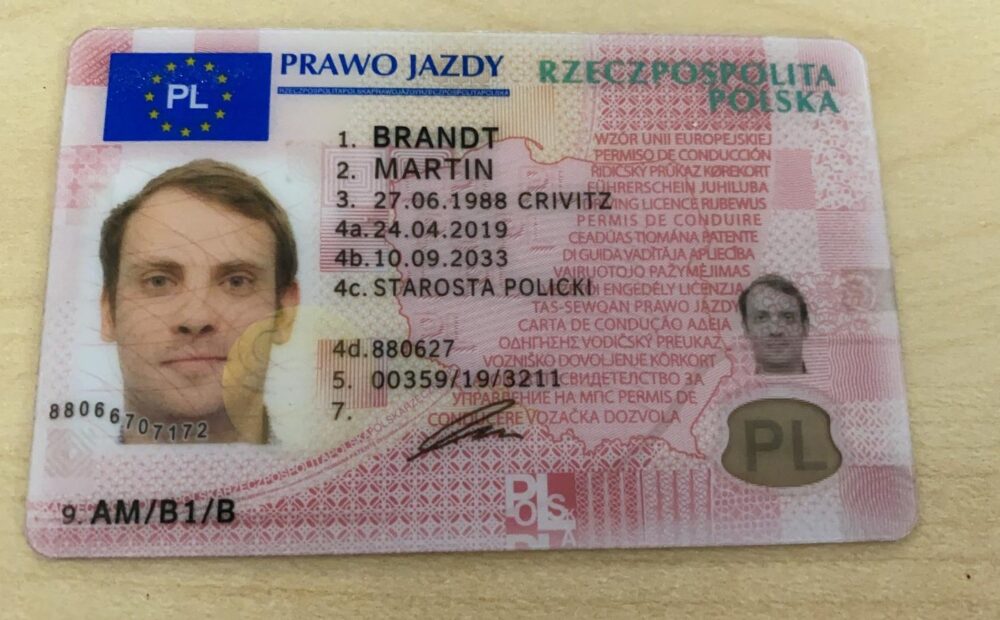
Understanding the Polish Driving License: A Comprehensive Guide
Driving is a vital part of modern-day life, using individuals the flexibility to take a trip at their convenience. In Poland, obtaining a driving license is an important milestone for numerous. This post intends to provide comprehensive insights into the Polish driving license, covering the process of getting one, the types of licenses available, and common FAQs.
Kinds Of Polish Driving Licenses
Poland concerns numerous classifications of driving licenses based upon car types. The main licenses include:
| License Category | Vehicle Type | Minimum Age | Needed Tests |
|---|---|---|---|
| AM | Mopeds and small scooters | 14 years | Theoretical and practical |
| A1 | Motorbikes approximately 125cc | 16 years | Theoretical and practical |
| A2 | Motorcycles with an optimal power of 35kW | 18 years | Theoretical and practical |
| A | Unlimited bikes | 24 years | Theoretical and practical |
| B | Automobile (as much as 3.5 lots) | 18 years | Theoretical and useful |
| C | Trucks (over 3.5 heaps) | 21 years | Theoretical and practical |
| D | Buses | 24 years | Theoretical and useful |
| BE | Trailers (over 750 kg) | 18 years | Theoretical and practical |
Categories Explained
- AM: This license is primarily for those looking to operate scooters or mopeds. It has the most affordable age requirement.
- A1: Ideal for those who wish to ride light bikes.
- A2 and A: For more effective bikes, with A permitting unlimited access to all motorbike types.
- B: The most typical license for driving traveler vehicles.
- C and D: These licenses cater to business lorry drivers, frequently requiring extra training and screening.
- BE: Allows motorists to tow trailers over specific limitations.
The Process of Obtaining a Polish Driving License
Step 1: Enroll in a Driving School
The first step towards getting a Polish driving license is enrolling in a licensed driving school. It is vital to pick a school that is recognized by regional authorities to guarantee the credibility of your training.
Action 2: Theoretical Training and Exam
When enrolled, trainees need to complete a theoretical training course that covers traffic policies, vehicle operation, and road security. Following this, students take a theoretical assessment including multiple-choice concerns.
Action 3: Practical Training
After passing the theoretical exam, students begin useful driving lessons. This hands-on training is important to build driving skills and confidence. The variety of needed lessons can differ based on individual ability but usually covers numerous weeks.
Step 4: Practical Driving Test
Upon completion of the practical training, the student must pass a practical driving test conducted by a licensed inspector. This test evaluates the capability to operate a car securely and follow traffic policies.
Step 5: Application for the Driving License
After successfully passing both exams, students should gather required documents, consisting of proof of identity, residency, and evaluation outcomes, to request their driving license through the regional administrative office.
Needed Documents
- Recognition (e.g., nationwide ID, passport)
- Proof of home
- Medical certificate
- Documents from the driving school
- Assessment results
Advantages of Having a Polish Driving License
Acquiring a Polish driving license uses various benefits, consisting of:
- Independence: The most substantial advantage is the independence to drive without counting on public transport.
- Employment Opportunities: Many tasks require staff members to have a driving license, specifically in logistics, sales, and delivery services.
- Travel: Having a driving license makes traveling within Poland easier and more flexible.
- Recognition within the EU: A Polish driving license is recognized across European Union member states.
Typical FAQs About the Polish Driving License
1. For how long does Kupić Prawo Jazdy require to acquire a Polish driving license?
The period varies based on individual preparedness, however the entire process can take anywhere from a couple of months to a year, depending on how regularly one goes to lessons and the speed of practical and theoretical test scheduling.
2. Can foreigners get a Polish driving license?
Yes, foreigners living in Poland can obtain a Polish driving license. They should offer a valid residency permit and pass the theoretical and practical evaluations.
3. Is there a difference in between a Polish driving license and an international driving authorization?
Yes, a Polish driving license specifies to Poland and may not be valid in other countries. For driving abroad, it is a good idea to obtain an International Driving Permit (IDP).
4. What happens if I stop working the driving tests?
A candidate can retake the tests after a minimum waiting period. The number of retries may differ based upon particular regulations, but trainees are usually motivated to undertake further practice before trying again.
5. Does a Polish driving license have an expiration date?
Yes, a Polish driving license typically expires after 15 years from the date of issuance. Drivers must request renewal within this timeframe, supplying upgraded documentation.
Acquiring a Polish driving license is a considerable achievement that opens up lots of opportunities for travel and work. Comprehending the kinds of licenses readily available, the application process, and the associated advantages can help people in browsing this important journey. While the process may appear daunting, the supreme benefit-- freedom and autonomy-- is well worth the effort. With the right preparation and resources, anyone can effectively acquire their Polish driving license and enjoy the open roadways of Poland and beyond.